
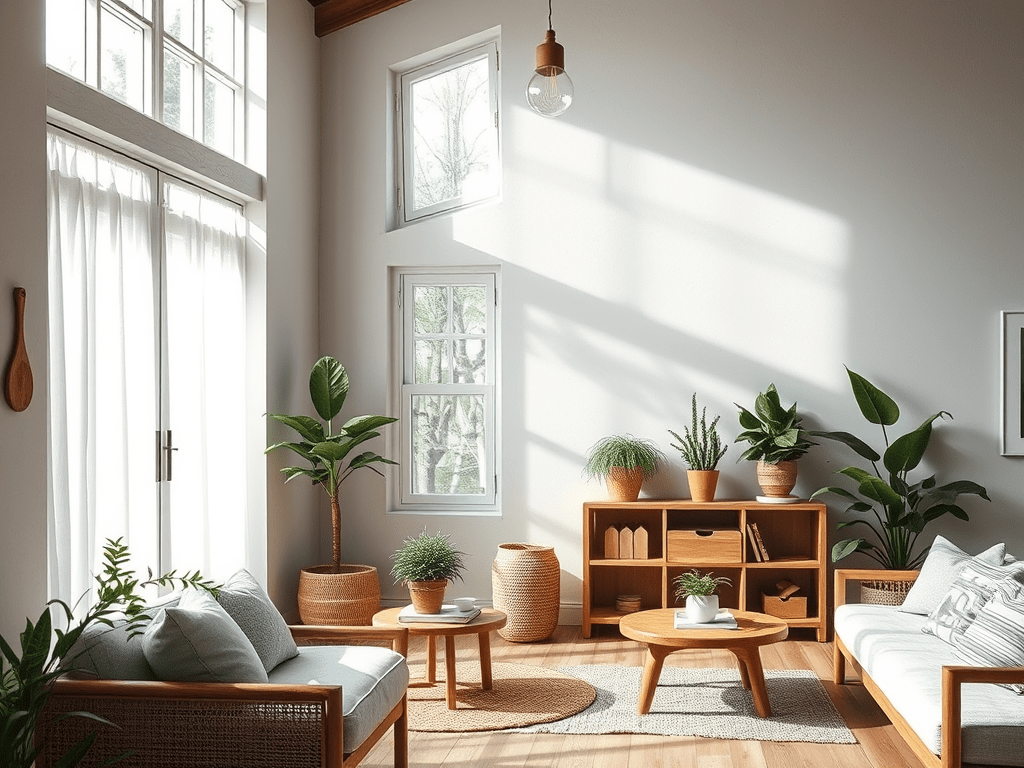
This page is dedicated to sharing simple, actionable steps to help you create a home that’s both beautiful and kind to the planet. Whether it’s making small changes to reduce waste, choosing sustainable materials, or creating energy-efficient systems, every choice you make has a lasting impact.
I believe that living more consciously at home doesn’t have to be overwhelming—it’s about making thoughtful, purposeful decisions that align with your values. Together, let’s explore how to design a home that’s as eco-friendly as it is comfortable, all while minimizing our footprint and maximizing our connection to nature.
- Furniture & Décor: Look for items made from sustainable, recycled, or reclaimed materials. Wood from responsibly managed forests (look for FSC certification) and furniture made from upcycled materials are great choices.
2. Bedding & Textiles: Opt for organic cotton, linen, or hemp for bedding, towels, and curtains. These materials are more eco-friendly because they are grown without harmful pesticides and require less water.
3. LED Lighting: Switch to energy-efficient LED bulbs that use less power and last longer.
4. Solar Panels: If possible, consider investing in solar panels or using green energy providers to power your home.
5. Low-Flow Fixtures: Install low-flow shower heads, faucets, and toilets to reduce water usage.
6. Recycling System: Ensure your home has a convenient recycling system for paper, plastic, glass, and metal, and make sure you’re following local guidelines for disposal.
7. Eco-Friendly Cleaners: Choose natural cleaning products that are biodegradable and free from harsh chemicals, which are often harmful to both your health and the environment. You can create your own cleaners using ingredients like vinegar, baking soda, and lemon juice, which are inexpensive, effective, and non-toxic.
8. Minimalist Approach: Reduce unnecessary items and choose quality over quantity. This cuts down on waste and the need for constant consumption.
9. Switch to Glass or Stainless Steel: Replace plastic containers and bottles with reusable glass or stainless steel alternatives.
10. Indoor Plants: Having plants in your home not only improves air quality but also adds natural beauty to your space. Choose low-maintenance plants that thrive indoors, like snake plants, pothos, or peace lilies.
Creating an eco-conscious home is an ongoing journey, not a destination. Every small change we make—from the products we choose to the way we interact with our environment—helps build a more sustainable and intentional lifestyle. Whether you’re just starting out or looking for ways to further reduce your footprint, remember that each step you take matters. By embracing mindful choices, we not only transform our living spaces but also contribute to a healthier planet for future generations. I hope the ideas and tips shared here inspire you to continue making sustainable decisions in your own home, one mindful choice at a time. Let’s keep building a better, greener world—together.
 Mindful minimalist
Leave a comment